Write Your First Book

Bestselling author Allegra Huston on how to do it wrong—and then do it right
Are you ready to write a book, but not sure how to get started?
When I sat down to write my first book, Love Child: A Memoir of Family Lost and Found, I thought I knew. I'd been Editorial Director of a major literary publishing house in London, and I’d written lots of magazine and newspaper articles. So I was feeling pretty confident.
That didn’t last more than a week.
How Not to Start Writing Your Book
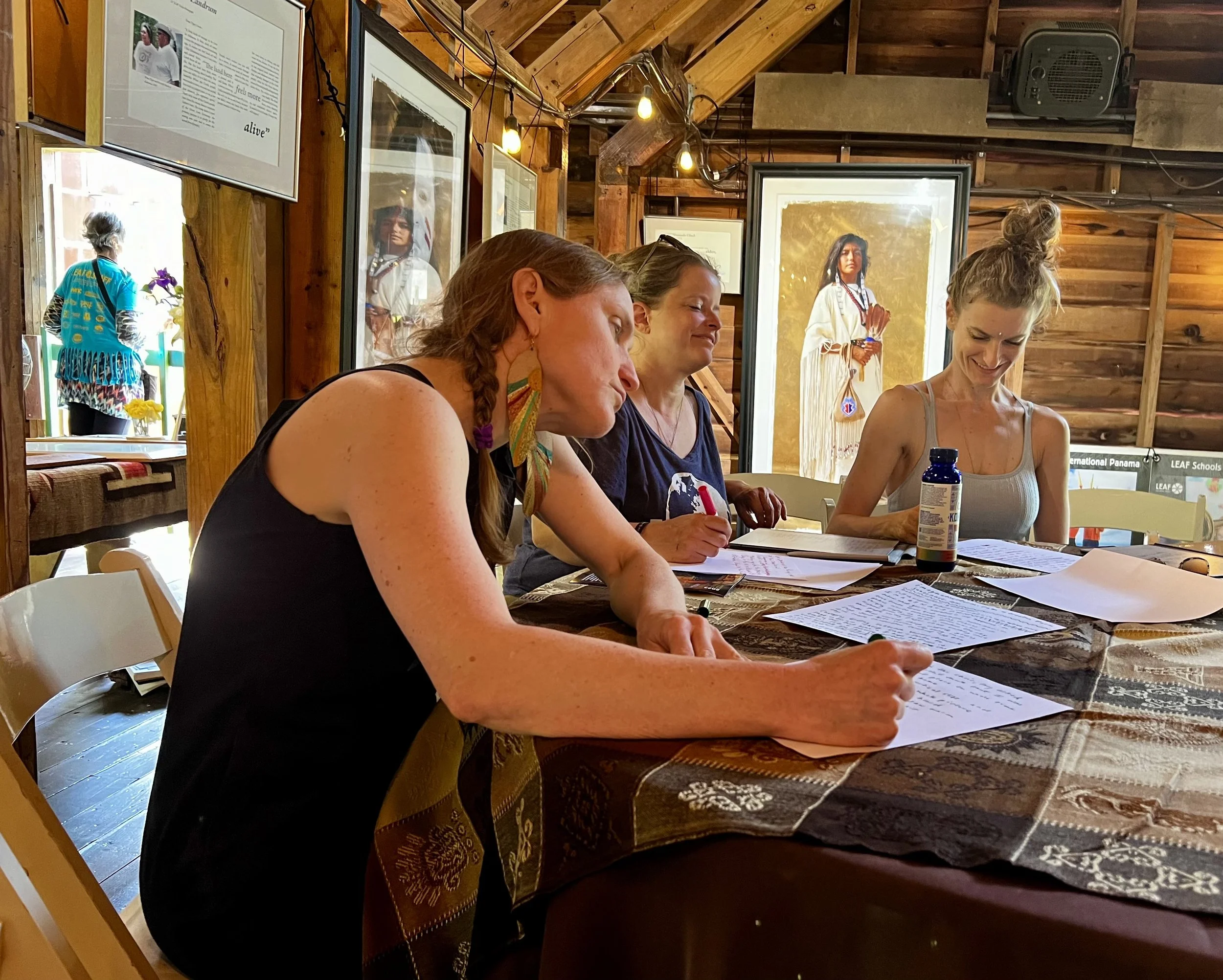
As a publisher, I’d read at least 100 book proposals that consisted of an outline and a few sample chapters. So I thought—like most people do who want to become authors—that I needed to “figure out” the plot and then start at the beginning.
Except I couldn't figure out where the beginning was. My first memory? No momentum. Chronologically, with my mother's story before I was born? Unfocused. In the present day? That didn't work either.
So I put the outline aside for the time being and started on the sample chapters. And I hated what I wrote. It was stiff and self-conscious and made me cringe. I felt lost and frustrated and hopeless. I thought, “I guess I’m just not a good writer.”
Have you made the mistake I made, and sat down to “write the book”? Did you find yourself thinking the thoughts I was thinking?
Some writers are gifted by the gods with the ability to just put a gripping story straight onto the page, but that isn’t the case for most of us. Pulitzer Prize-winning novelist Barbara Kingsolver said that she has to write 300 pages before she gets to page one. Even though I’d edited hundreds of books, I didn't know how messy the writing process really is.
Mess Is Currency, Not a Liability
The idea is the cornerstone of the Imaginative Storm process. Don’t be afraid to be messy: to jump around in your story, to write half-sentences or repeat yourself or say the same thing a few different ways. That will give you more to work with when the time comes to rewrite and edit.


Don’t Start Writing Your Book
Really! Don’t write the book. Instead, generate material.
If you’re like me, you want to write well. And if you’re “writing,” it’s very hard not to try to write well. But when you try to write well, you're anxious: can I do this? You're judgmental: am I writing well? You're hypercritical. Your rational mind is in the driver's seat, and it's probably trying to make you write like what you think is good writing, which by definition was written by somebody else. So your writing doesn't sound like you. Now you've gone backward: you've lost your voice, and you need to find it. You get even more hypercritical. You suffer writer's block, because the whole thing is such an ordeal. So very often, you give up.
So, try not writing! Don’t “write”—generate. And don’t call what you’re producing “writing”—call it material.
‘Material doesn’t have to be good. It just have to have good stuff in it: potential scenes, characters, images, ideas. They don’t have to be fully formed or well expressed. You can do that later. What you can’t add later is the spark, the energy, the originality, the authenticity. Those only come when you’re not trying to write well.
And don’t start at the beginning. In fact, you may not even know where it is, and that’s actually a good thing. Trust that it will reveal itself—later, when you’ve got lots of material to work with. There are many good books on story structure (my favorite is John Truby’s The Anatomy of Story) that will help you. But structure is no good without fresh, original, authentic material.
How do you get your material to be fresh, original, and authentic? Don’t try to write well. Don't try to write what's in your head. Surprise yourself. Write what you don't know.

The Origin of Writing What You Don’t Know
So there I was, in the coffee shop where I went every day to write for two hours or so. I was trying to get down on paper some memories from before my mother died, when I was four years old. Memories that, as you can imagine, were very precious to me.
I closed my eyes and imagined myself back in a room, from which I would look out the window and see my mother on the street. But when I looked out the window, suddenly my perspective was from my bedroom, on a higher floor. My mother was to the right, then to the left, then not there at all. It was a horrible experience and I nearly gave up the whole project.
But I'm a mule, and I hate giving up. So I thought, "Fine! If I can't write what I know, I'll write what I don't know." And that’s what I did. I couldn’t write what I remembered, so I wrote what I didn’t remember. And discovered that the material I generated was fresh, authentic, and emotionally power.
It worked. The feared critic Lynn Barber wrote in her review of Love Child that I am "incapable of writing a dull sentence." The truth is, I'm very capable of it. The Imaginative Storm method is what made that review possible.
That’s why I say I’m the poster child for the Imaginative Storm method.
Come Write with Us!
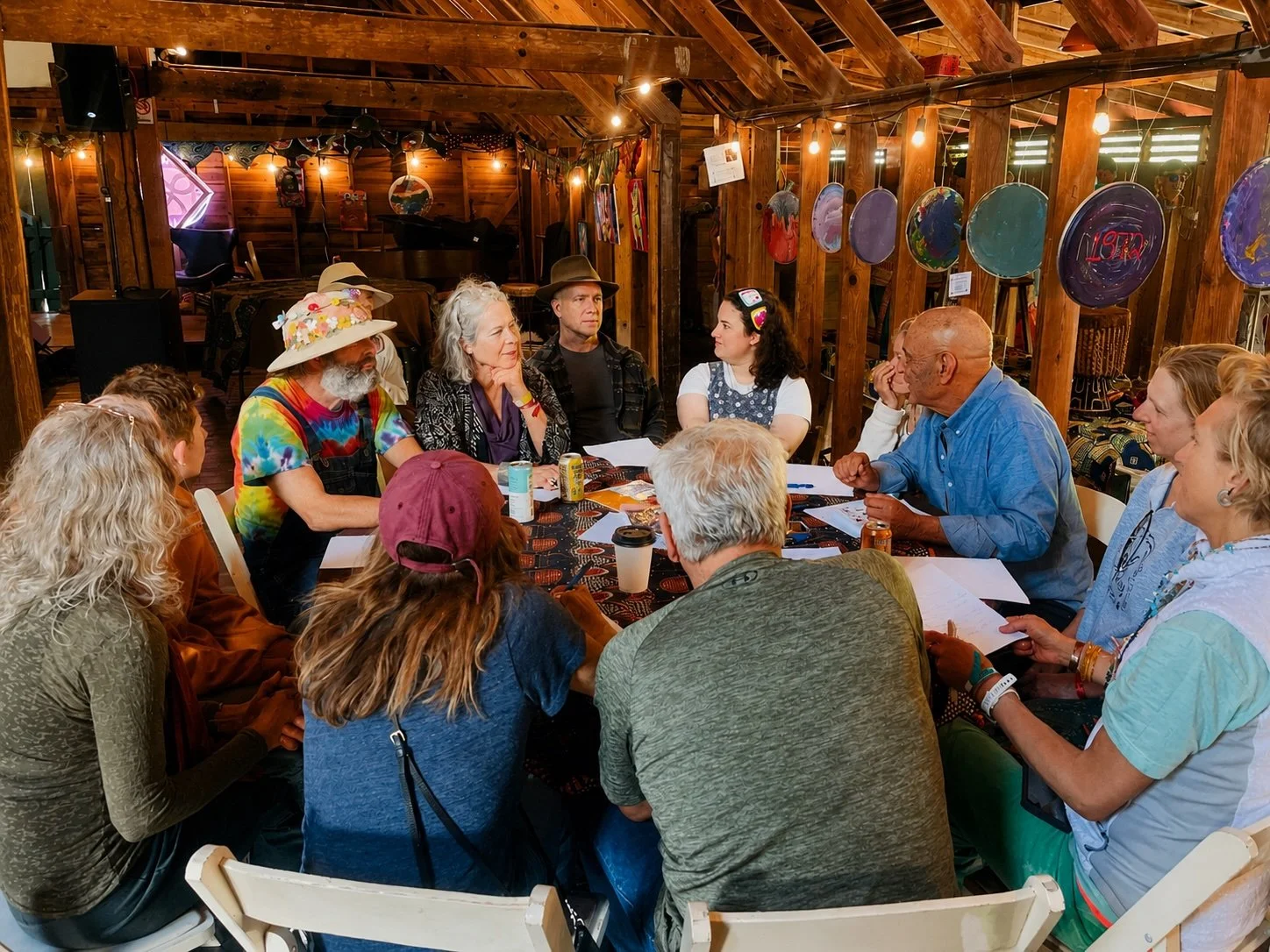
Everything we do in the Imaginative Storm is suitable for writers across the spectrum: from those who consider themselves beginners to published writers with many titles to their name.
Join our Prompt of the Week Zoom to write to a random prompt for 10 minutes! We usually have some newcomers, and we will welcome you. It’s on Thursday at 3 pm PT / 6 pm ET, for an hour.
Explore our Circle site, where we publish the raw material we write in 10 minutes. You’ll get an idea of what’s possible, and how we support one another with appreciation rather than competition or criticism.
Get our Daily Prompt delivered straight to your inbox every morning.
Check out our vast archive of image prompts on YouTube. We guide you step by step in working with the prompt, share what we did in our Saturday session, and time you for 10 minutes while you write.
Let us guide you step by step through the 10 sessions of the Imaginative Storm method, in our self-paced online course Write What You Don’t Know: Imaginative Storm Writer Training. The course includes a monthly live Zoom with Imaginative Storm co-founders Allegra Huston and James Navé. Ask us anything!
Sign up for one of our live workshops, on Zoom or in person, and explore the memoir, or fictional story, you might write.
Order our book Write What You Don’t Know: 10 Steps to Writing with Confidence, Energy, and Flow.
Subscribe to Imaginative Storm on Substack for our newsletter with thoughts on writing.
We hope to see you.
What People Are Saying About imaginative Storm
Testimonials from 12 members of the Imaginative Storm writing community
-
![]()
“You helped me overcome my critic. I went from being a fearful writer to a joyful one.”
— Corinne Crone, intimacy coach
-
![]()
"After Imaginative Storm, writer's block is a myth."
Abdullah H. Erakat, journalist and screenwriter
-
![]()
“This wave of words came in 10 minutes in a beautifully playful space. I find the Imaginative Storm method intriguing, freeing, well-seasoned and lovingly crafted. I am delighted, surprised and nourished every time I jump into it!”
— Esme Olivia, singer/songwriter
-
![]()
"The Imaginative Storm helped me go places I would not normally consider going and kept me from overthinking when I got there. The number of poems from the Imaginative Storm that have been published speaks to the success of the method and its benefit to me as a poet.
— Louis Faber, poet
-
![Wendy Shaw]()
"It's like discovering a part of yourself you didn't know existed. What a gift!"
Wendy Shaw, visual artist
-
![]()
“It’s life-changing. Even if I’m not writing, I’m thinking about writing.”
Deborah Williams, writer and educator
-
![]()
“I am brought ever closer to something Carl Jung said many years ago: ‘Until we make the unconscious conscious, we will live our life and we will call it fate.’ I feel the Imaginative Storm process is ever getting me closer and closer to a more conscious understanding of my life.”
Dan Stenabaugh, writer
-
![]()
“The Imaginative Storm process has given me the freedom to tap so many aspects of myself. It’s so easy to get stuck trying to write about events until you shake up the brain cells and spill them out in a fresher way."
Darlene VanderHoop, writer and yoga instructor
-
![Alice W. Meadows]()
“Writing what I don't know has given me more confidence and freedom and flow to write what I do know. It's like having a base camp to set out on writing adventures."
Alice W. Meadows, writer
-
![]()
"What this process teaches us to do is to be with the percolating of all the chaos inside us. It's raw, but the pen keeps going and amazing things arise."
Arlene Shapiro, performer and writer
-
![]()
"Imaginative Storm opens up this creative cave, gives me a shovel and shows me where to dig. It says, ‘Look at this gem! Look at that gem!’ Before I know it, I’m mining words that tumble out on to the page."
Sandi Dittmer, writer