How to Edit
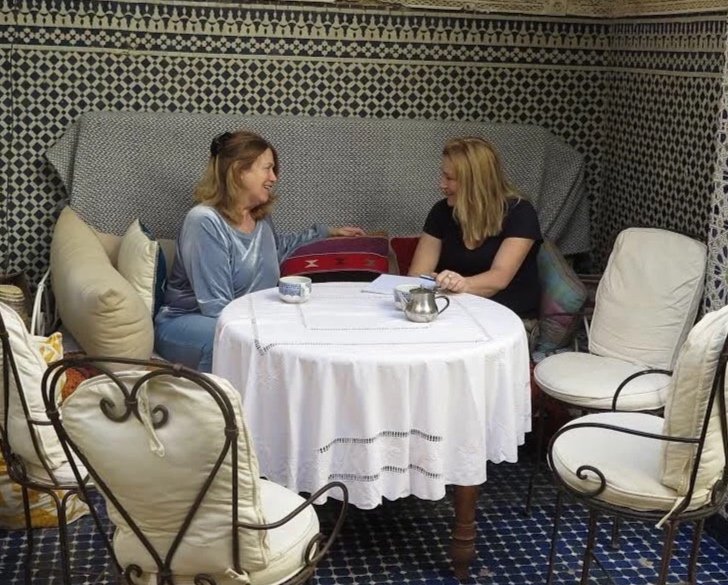
Editing your own work, editing others, and getting others to edit you
The Imaginative Storm method is all about generating fresh, original, authentic material. Then what?
Well, that may be all you require for your own creative satisfaction. But if you want to publish your writing, you’ll want to make it as good as it can possibly be before it goes out of the house.
Imaginative Storm co-founderAllegra Huston has been a sought-after editor for many decades, and was Editorial Director of one of London’s top literary publishing houses. She was encouraged to write How to Edit and Be Edited after working with an author who had refused to make the changes his previous editor recommended.
“Why?” she asked.
“Because I didn’t even know if she liked the book,” he replied.
Editing is not merely criticism. It’s a collaborative process that aims to make the writing as good as it can possibly be. Maybe that collaborative process is between your judging mind and your creative mind. You can still follow the advice below.
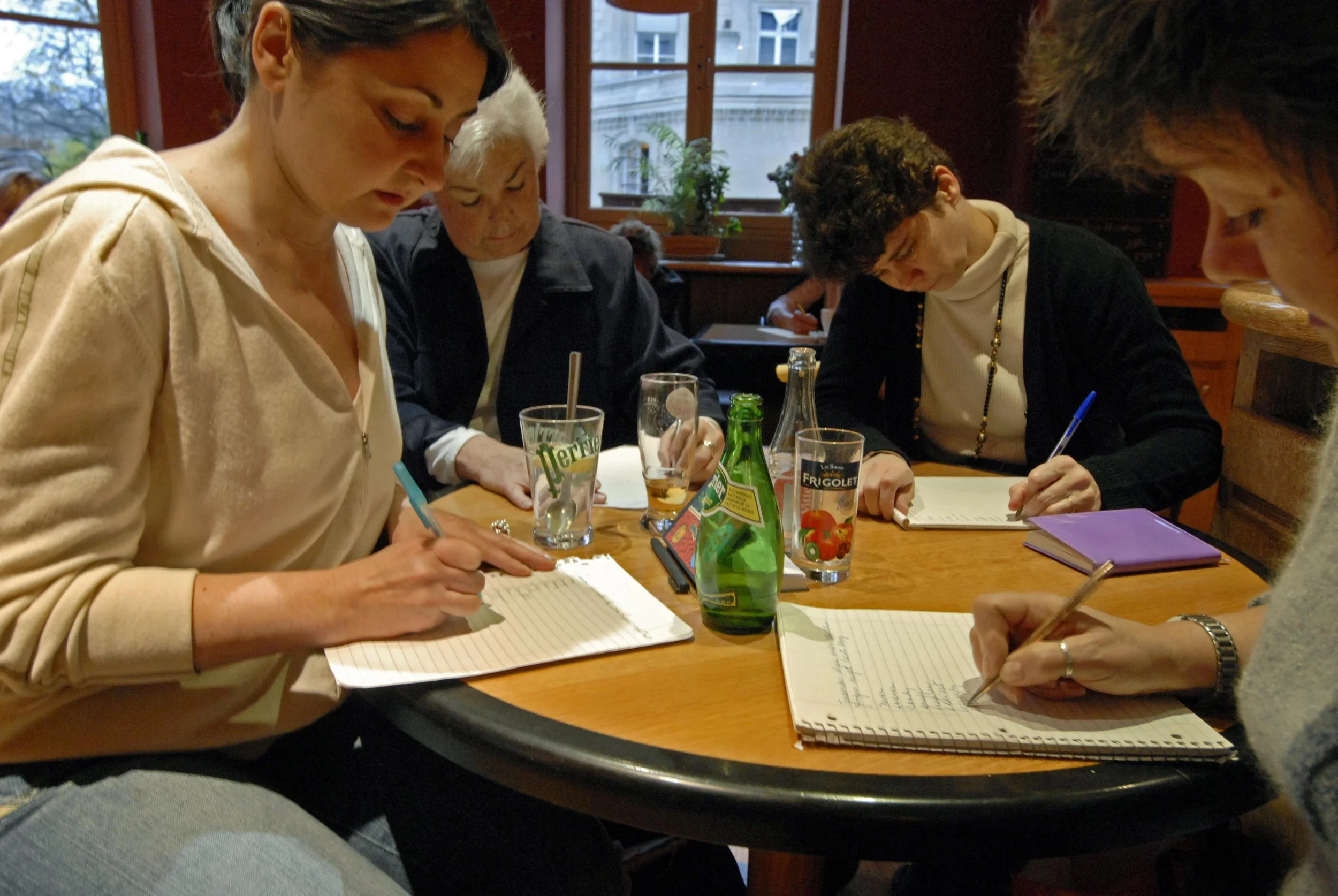

The Two Rules of Editing
Editing is very subjective, and it’s a delicate situation. Most authors are touchy about their work, and quite rightly. Expressing yourself on the page is a reflection of who you are. And when you’ve worked hard at something for probably years, it’s hard to just take criticism in stride.
Rule #1: Praise
Yes, an editor’s job is to identify what can be improved, but if you take a critical approach immediately, the result is a defensive author who closes their ears. When you lead with praise, you demonstrate that there’s something about this writing that you like. (If there’s nothing, you’re not the right editor for it.) The author gets a better understanding of what they’re doing well, and they know you appreciate it.
You’re also setting a realistic benchmark for the material that you’re going to suggest needs improvement. The author knows that they can write at least that well, and they’re motivated to bring the whole thing up to the standard you’ve shown them.
Rule #2: Ask questions
Many people are under the impression that it’s the editor’s job to improve the author’s writing. It isn’t. It’s the editor’s job to help the author improve their writing.
The classic example of bad editing is very common: the film development executive who says, “You need a car chase here.” They’re not identifying a problem; they’re leaping to a solution that very likely won’t be the right one. The solution may be formulaic and unimaginative. Or it might be interesting, but wrong for this story. Or the author may have already tried that solution and it didn’t work..
An author who is told what to do by someone who doesn’t care about the work as deeply as they do, and doesn’t respect their authorship, is going to do one of two things: a) get sullen and lose motivation; or b) try to please and lose their originality and authenticity.
The editor’s job is to identify problems, not to present solutions.
The editor’s job is to identify problems, not suggest solutioins.
The best strategy is to identify the problem by giving plain information on your response as a reader—”I don’t understand why the character is doing this,” or, “this feels repetitive,” or, “the momentum has disappeared”—and then ask questions.“Why is the character doing this? What do they want?”“What could make this incident build on the previous one, instead of repeating it?”“Given what just happened in the story, what action would this character take?”“What’s at stake here?”
The best ideas arise in the conversation between author and editor as long as both have only one agenda: to make the work as good as it can possibly be.


Getting Feedback on Your Own Writing
Getting a fresh eye on your writing is essential. It’s very hard to be objective about your own work. If you know a good professional editor and have the money to hire them, do it. The chances are you don’t, and you’ll turn to your circle of friends and acquaintances.
Choose carefully. Don’t give your unedited work to anyone who will have an agenda: a sibling, a parent, a competitor. Only give your writing to people you can trust to be both honest and kind. If you’re asking someone to read a full-length book, be aware that this is a big ask: 10 hours or more of their time. So if you can, ask people for whom you can return the favor.
We suggest having three people read your work. If you have three opinions, you can see where they agree and where they differ. And even when they differ (one person says cut this, another says expand it), they’re likely trying to solve the same problem in different ways. You can triangulate these responses to figure out what the problem actually is—and maybe the solution will be something entirely different.
But before you do this, know what good editing is and become a better editor yourself. That way, you can give your readers guidance on how you want their feedback to come to you.

Line Editing and Copyediting
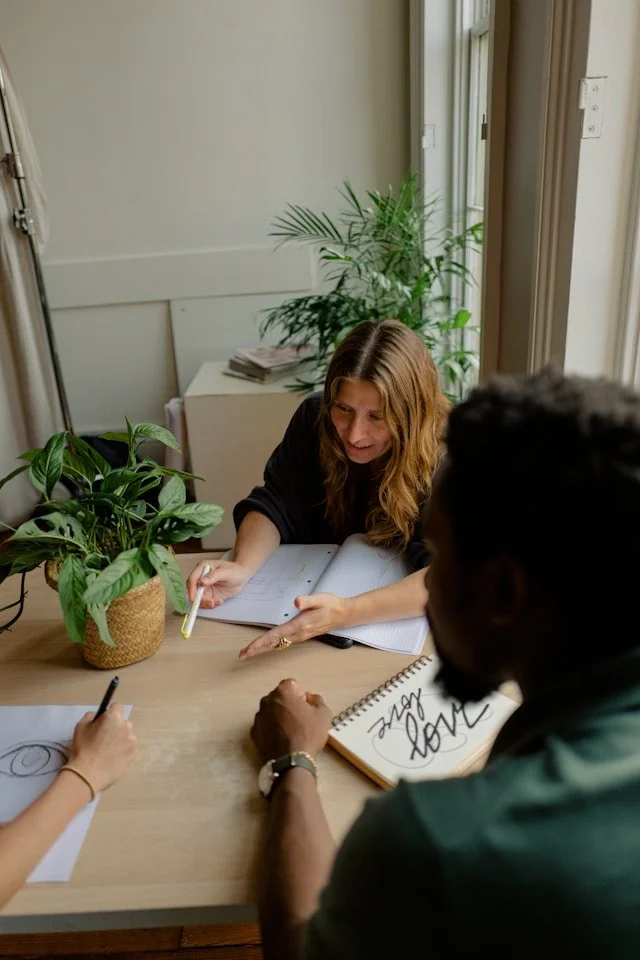
Line editing and copyediting are different. A line editor will cut and change words to make the sentences smoother, more euphonious. They’ll cut repetition of words and phrases. They may even rearrange paragraphs.
If you’re line editing, it’s a good idea to put a comment in Track Changes saying something like, “What do you think of this?” or “Suggest delete.” You don’t want to sound like a teacher correcting a sixth-grader. You want the author to know that you’re on their side, not setting yourself up as their judge.
Copyediting fixes mistakes of spelling, grammar, word usage, and punctuation and focuses on consistency throughout the manuscript. Many things are still a judgment call, because English is a very freeform language, but you’ll accept most of the changes a good copyeditor makes. Good copyediting is one of the biggest differences between a professionally published book and a self-published one. So if you’re self-publishing, don’t skimp on this step. Hire a professional.
Come Write with Us!
Everything we do in the Imaginative Storm is suitable for writers across the spectrum: from those who consider themselves beginners to published writers with many titles to their name.
Join our Prompt of the Week Zoom to write to a random prompt for 10 minutes! We usually have some newcomers, and we will welcome you. It’s on Thursday at 3 pm PT / 6 pm ET, for an hour.
Explore our Circle site, where we publish the raw material we write in 10 minutes. You’ll get an idea of what’s possible, and how we support one another with appreciation rather than competition or criticism.
Get our Daily Prompt delivered straight to your inbox every morning.
Check out our vast archive of image prompts on YouTube. We guide you step by step in working with the prompt, share what we did in our Saturday session, and time you for 10 minutes while you write.
Let us guide you step by step through the 10 sessions of the Imaginative Storm method, in our self-paced online course Write What You Don’t Know: Imaginative Storm Writer Training. The course includes a monthly live Zoom with Imaginative Storm co-founders Allegra Huston and James Navé. Ask us anything!
Sign up for one of our live workshops, on Zoom or in person, and explore the memoir, or fictional story, you might write.
Order our book Write What You Don’t Know: 10 Steps to Writing with Confidence, Energy, and Flow.
Subscribe to Imaginative Storm on Substack for our newsletter with thoughts on writing.
We hope to see you.
What People Are Saying About imaginative Storm
Testimonials from 12 members of the Imaginative Storm writing community
-
![]()
“You helped me overcome my critic. I went from being a fearful writer to a joyful one.”
— Corinne Crone, intimacy coach
-
![]()
"After Imaginative Storm, writer's block is a myth."
Abdullah H. Erakat, journalist and screenwriter
-
![]()
“This wave of words came in 10 minutes in a beautifully playful space. I find the Imaginative Storm method intriguing, freeing, well-seasoned and lovingly crafted. I am delighted, surprised and nourished every time I jump into it!”
— Esme Olivia, singer/songwriter
-
![]()
"The Imaginative Storm helped me go places I would not normally consider going and kept me from overthinking when I got there. The number of poems from the Imaginative Storm that have been published speaks to the success of the method and its benefit to me as a poet.
— Louis Faber, poet
-
![Wendy Shaw]()
"It's like discovering a part of yourself you didn't know existed. What a gift!"
Wendy Shaw, visual artist
-
![]()
“It’s life-changing. Even if I’m not writing, I’m thinking about writing.”
Deborah Williams, writer and educator
-
![]()
“I am brought ever closer to something Carl Jung said many years ago: ‘Until we make the unconscious conscious, we will live our life and we will call it fate.’ I feel the Imaginative Storm process is ever getting me closer and closer to a more conscious understanding of my life.”
Dan Stenabaugh, writer
-
![]()
“The Imaginative Storm process has given me the freedom to tap so many aspects of myself. It’s so easy to get stuck trying to write about events until you shake up the brain cells and spill them out in a fresher way."
Darlene VanderHoop, writer and yoga instructor
-
![Alice W. Meadows]()
“Writing what I don't know has given me more confidence and freedom and flow to write what I do know. It's like having a base camp to set out on writing adventures."
Alice W. Meadows, writer
-
![]()
"What this process teaches us to do is to be with the percolating of all the chaos inside us. It's raw, but the pen keeps going and amazing things arise."
Arlene Shapiro, performer and writer
-
![]()
"Imaginative Storm opens up this creative cave, gives me a shovel and shows me where to dig. It says, ‘Look at this gem! Look at that gem!’ Before I know it, I’m mining words that tumble out on to the page."
Sandi Dittmer, writer