

Imaginative Storm Memoir Writing Courses: Shape Your Life into the Story Only You Can Tell

Two Ways to Learn About Memoir Writing
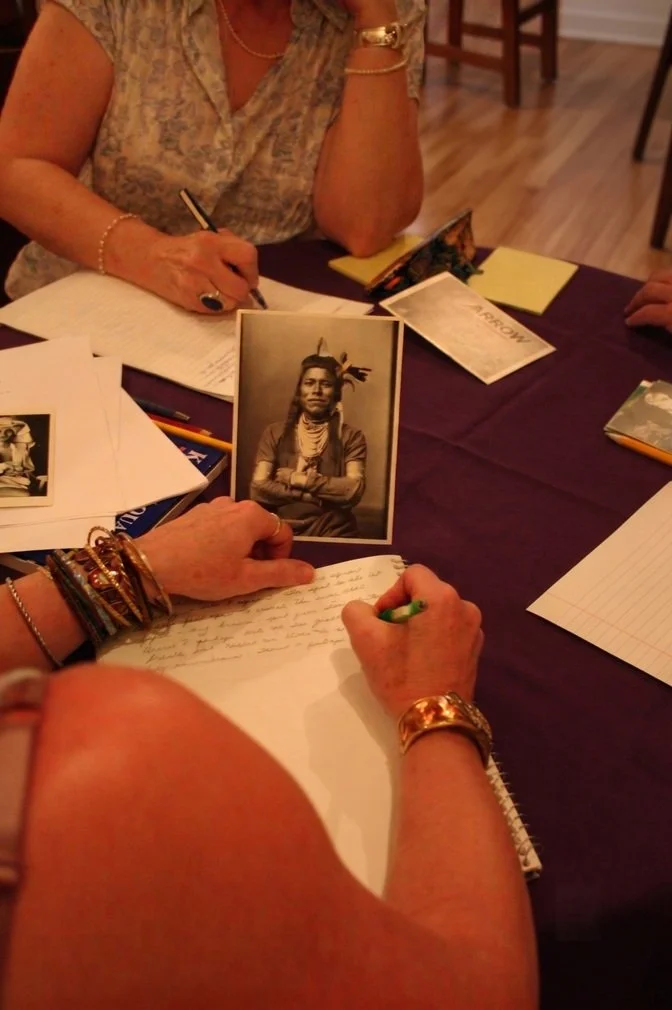
We offer two ways to learn about writing a memoir. First, we offer a 10-session self-paced audio or video course that goes in-depth into the Imaginative Storm method. It will teach you how to access your imagination and memories and get words down on paper. Then it will go into the craft of effective, memorable writing.
Second, we offer a Manageable Memoir course that is 90 minutes and covers the nitty-gritty of getting your life story into a first draft.
The Manageable Memoir: Write Your Life Story Without the Overwhelm
Build a memoir in 100 Days or less
In this 90-minute course, you’ll learn how to break your story down into 10-minute bursts of writing. Navigating by your two guiding stars (we’ll help you figure out what those are), you’ll build up a collage of perceptions and memories held together by a present-day throughline.
The key is to start small, be consistent, and understand that every moment in your life holds a story worth telling. Your life is not one story; it’s a thousand stories you can weave together however you please.
What you’ll learn in 90 minutes:
Focus on what matters most in your life story
Navigate the overwhelm by using 10-minute writing bursts
Build a meaningful structure using your two “guiding stars.”
Create a powerful sense of momentum from the very first day
Let go of uncertainty and start with confidence
By the end of this session, you’ll already have three new pieces of writing.

The 10-Session Memoir Course: Structured Guidance, Session by Session
Memory is raw material, and this memoir-writing course teaches you what to do with it. Life is not a story, not yet. It is a pile of moments, some vivid, some half-forgotten, none of them arranged. The work of memoir is turning that pile into something a reader can walk through.
With the Imaginative Storm method, you will learn how to surface the scenes that actually matter, how to find the thread that connects them, and how to shape your life story into prose that moves the reader. You will learn what to leave in and, just as important, what to leave out. You will learn how time works on the page, how to write yourself as a character, and how to handle the real people in your life with both honesty and care.
By the end, you will understand how memoir holds together, and you will have the pages to prove it. Memoir is not the same as journaling, and it is not therapy, though the writing can heal. It is a craft. The distance between writing that helps you and writing that reaches a reader is technique, and technique is exactly what we built this course to deliver.
Listen Now
Listen to extracts from the book and audio course Write What You Don’t Know
How to a playful approach leads to breakthbroughs.
How to find your authentic voice on the page
How to vanquish your inner critic.
Your most powerful material comes when you surprise yourself.
The secret to writing well is not trying to write well
Be vulnerable, explore the uncomfortable, and develop your confidence.
Who This Memoir Course Is For
This memoir course is for anyone with a story they cannot quite put down. You do not have to know how it ends, or even how it begins.
Some students arrive with decades of journals and no idea how to make them into a book. Others have a single chapter they have rewritten twenty times. A few come in with nothing but the feeling that their experience meant something and deserves to be written well. All of them belong here.
What this course asks is not expertise but willingness, the readiness to look closely at your own life and treat it with a writer’s attention rather than only a rememberer’s. If you have been telling yourself you will write it someday, we built this course for you to make that someday now. Think of it as a working memoir workshop rather than a lecture series. You write, you learn, you revise, and your life story writing gets sharper week over week.
The craft is only half of it. Staying in a regular writing rhythm, especially once the course is behind you, is what carries a memoir all the way to done. The Weekly Writing Circle is built for exactly that: a live hour every Saturday where you write alongside other people and keep the momentum from stalling. And the course is one step on a longer path. When you are ready to go further, Imaginative Storm also runs workshops, online intensives, and in-person retreats.


The 10-Session Memoir Writing Course Curriculum
The curriculum moves you from raw memory to a shaped narrative, one craft skill at a time, so you are always building on the session before. Early sessions focus on getting the material onto the page without judgment. Later ones turn to structure, voice, and revision—the work of making a true story read like a good one. The full session-by-session breakdown is below.
The course contains 10 writing sessions, each about 90 minutes long. The welcome session introduces you to the Imaginative Storm method, and the concluding session to set you on your writing path.
Each writing session consists of a short intro, a warmup prompt, two 10-minute prompts with a shorter list-making prompt between them. (We do the timing for you.) Each session ends with a Surf the Storm prompt to do in your own time.
The course also includes access to the Prompt Archive, so you can hear what other course participants wrote to the prompts you’re working with. (We recommend you listen to these after you write to the prompt yourself.)
-
Learn the principles of the Imaginative Storm method which includes: writing by hand, using a timer, writing what you don’t know.
What you’ll learn:
You won’t try to write a good poem. You’ll unleash your imagination — not your judgment and produce original lines.
-
Unlock the creative power that’s been waiting inside you
In this first session, you’ll discover the freedom of writing without second-guessing yourself. You’ll learn simple techniques to tap into your inherent creativity and write poetry like you’ve never written before.
What you’ll learn:
● How to tap into your imagination and write with spontaneity, originality, and creative flow
● How to find your true poetic voice and put your own experience, insight, and feeling into a line
● How to revive images and memories you’ve used before by finding a fresh angle or an untold layer
How to write more freely by letting go of the demand that every line be “good”
-
Unleash your raw, uncensored voice
In this high-energy session, you’ll write without rules or judgment. Poetry is meant to be heard before it’s meant to be understood — when you silence your inner critic, sound and feeling lead the way.
What you’ll learn:
● How to write past your inner critic and get to the raw first draft where the real lines are hiding
● How to let rhythm, sound, and onomatopoeia carry meaning before you’ve found the “right” word
● How to trust your first thought as your best thought, the instinct poets have leaned on for centuries
● How to turn unfiltered feeling into lines with heat, not politeness
-
Write with sensory power
Great poems don’t describe — they land in the body. In this session you’ll work with all five senses, plus the two poets rely on most: memory and intuition.
What you’ll learn:
● How sight becomes insight — training your eye so an ordinary object (a red wheelbarrow, a torn coat) can carry a whole poem
● How to use onomatopoeia, alliteration, and assonance so the sound of a line does as much work as its meaning
● How smell and taste anchor memory more precisely than any other sense, and how to put that anchor on the page
● How to trust intuition as a sixth sense for image-making — the instinct that tells you which detail is the poem
-
Use the details of a place to deepen a poem.
In this session, you’ll learn to let a place hand you its details, rather than reaching for description that could belong anywhere.
What you’ll learn:
● How to avoid descriptions that read like a list, and choose the one or two details that do the work
● How specific, concrete objects carry more weight in a poem than abstract statement
● How a place holds memory and mood, and how to let it do that without explaining it
How to write your way back into a remembered place through the senses, not just the facts
-
Incorporate nature’s power and symbolism
Nature has been the poet’s original material since before there were poems. In this session, you’ll explore how the elements — wind, water, fire, stone — become the vehicles for feeling that can’t be stated directly.
What you’ll learn:
● How to build metaphor from the natural world so it carries emotional weight instead of decoration
● How a single symbol can do more work than a paragraph of explanation
● How to move between the granular (one eagle over one ridge) and the expansive (what that eagle means) inside a single poem
● How to let image do the work that statement can’t
-
See beneath the surface of human interaction
This session explores how a look, a posture, or an overheard line reveals more than direct explanation ever could — and how to get that into a poem.
What you’ll learn:
● How to build a speaker or persona from a few sharp, observed details, the way a stranger’s coat or walk tells a story
● How to capture what’s unsaid between people and let the poem hold the tension instead of narrating it
● How overheard language and rhythm become raw material for a poem’s voice
● How to write from someone else’s point of view with empathy and precision
-
Write from real emotional depth
This session explores how to find the moment that won’t leave you alone, and turn it into a poem instead of just carrying it around.
What you’ll learn:
● How to recognize a “poetic incident” — the moment that demands to be written — and work with it
● How to write toward difficult material (grief, a hard parent, a loss) with enough distance to make art, not just confession
● How writing from another person’s vantage point can reveal what you didn’t know you understood about them
● How restraint, more than explanation, is what makes an emotional poem land
-
Use personal experience to deepen a poem
Your own life is your richest material. In this session, you’ll learn to mine it with the same rigor you’d bring to any other subject.
What you’ll learn:
● How to choose the one detail that carries an entire memory, instead of trying to include all of it
● How the “why” behind an experience, not just the “what happened,” is what makes a personal poem resonate
● How to find the emotional arc inside a memory before you start writing the poem
How to write your own history without flattening it into summary
-
Build a turn into your poem
A poem needs a turn the way a story needs a change — the moment where something shifts and the poem earns its ending. This session covers how to find that turn and build toward it.
What you’ll learn:
● Why plot isn’t just for fiction — how a poem needs the same sense of stakes and movement
● How to recognize the turn inside your material, the shift that gives a poem its reason for existing
● How to build momentum line by line so a reader leans in rather than drifts
● How to end a poem so it feels finished, not just stopped
-
Use contradiction and paradox to add dimension to your poem
Paradox is where poetic imagination catches fire, and where readers lean in. This session teaches you to hold two truths in a single line.
What you’ll learn:
● How contradiction fuels image-making, the way “be still my beating heart” means two things at once
● How to build metaphor and simile that link things that don’t obviously belong together, and make the link feel inevitable
● How to let a poem hold ambiguity instead of resolving it too neatly
● How to write an ending that surprises without cheating the poem that came before
-
Your final session of "Write What You Don't Know"! We will send you off into your writing future with one final prompt, and the hope that you will become part of our welcoming, supportive community.

Ready to Get Started?
There are two Ways to Take Our Poetry Writing Course
You can take our 10-session self-paced course in audio or video formats. Both go in-depth into the Imaginative Storm method. It will teach you how to access your imagination and memories and get words down on paper. Then it will go into the craft of effective, memorable poetry writing.

Purchase with confidence. Try the course and if you’re not completely satisfied, we’ll give you a full refund within 30 days of your purchase.
Not sure if this course is for you?
You can purchase just the Welcome Session and Session One video for $39. If you like it, you can then purchase the rest of the sessions for $360.
Meet Your Memoir Writing Instructors
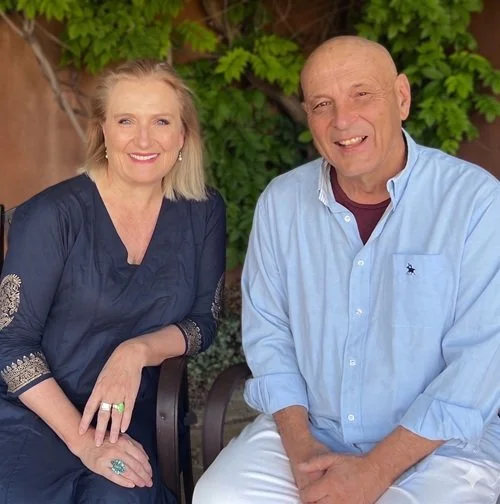
Allegra Huston has not just taught memoir. She has written one. Her book, Love Child: A Memoir of Family Lost and Found took her through every stage of the form, the excavation, the doubt, the shaping, and the long work of seeing it into print. That lived experience is what she brings to the course. She knows the territory because she has crossed it, and she teaches from the inside of the work rather than the outside of a syllabus. Before any of that, she spent years as an editor, which gives her an unusual double vision. She can feel a memoir as a writer and diagnose it as an editor in the same breath.
James Navé holds an MFA in Poetry from Vermont College of Fine Arts and has spent decades helping writers find the emotional core of their stories. As a manuscript coach, he is especially good with the hardest part of memoir, the tangled, tender material most writers would rather walk around. He has a way of helping you say the true thing without flinching, and of showing you that the scene you were most afraid to write is usually the one the book needs most.
What Past Memoir Students Say
-
![]()
“I love the way present ideas bring up past ideas. Can’t wait to see what will evolve in the coming weeks. The course is fantastic!”
— Dan Stenabaugh, writer
-
![]()
“This has comforted me very much in the thought that it brings the memoir down to something manageable, and then grows from there and builds it up gradually.. It’s the intimacy of writing, having fun, being with yourself, and then going wherever you want to go.”
— Philippe Trufferf, businessman
-
![]()
“I love how you designed the Manageable Memoir course in small chunks, and it is helping me look at my memoir in a new light.”
— Alice W. Meadows, writer

Video Testimonials from Our Participants
In-Person Memoir Writing Retreat
Looking for an in-person immersive memoir writing experience? We host memoir writing retreats. Click the button below to learn more.