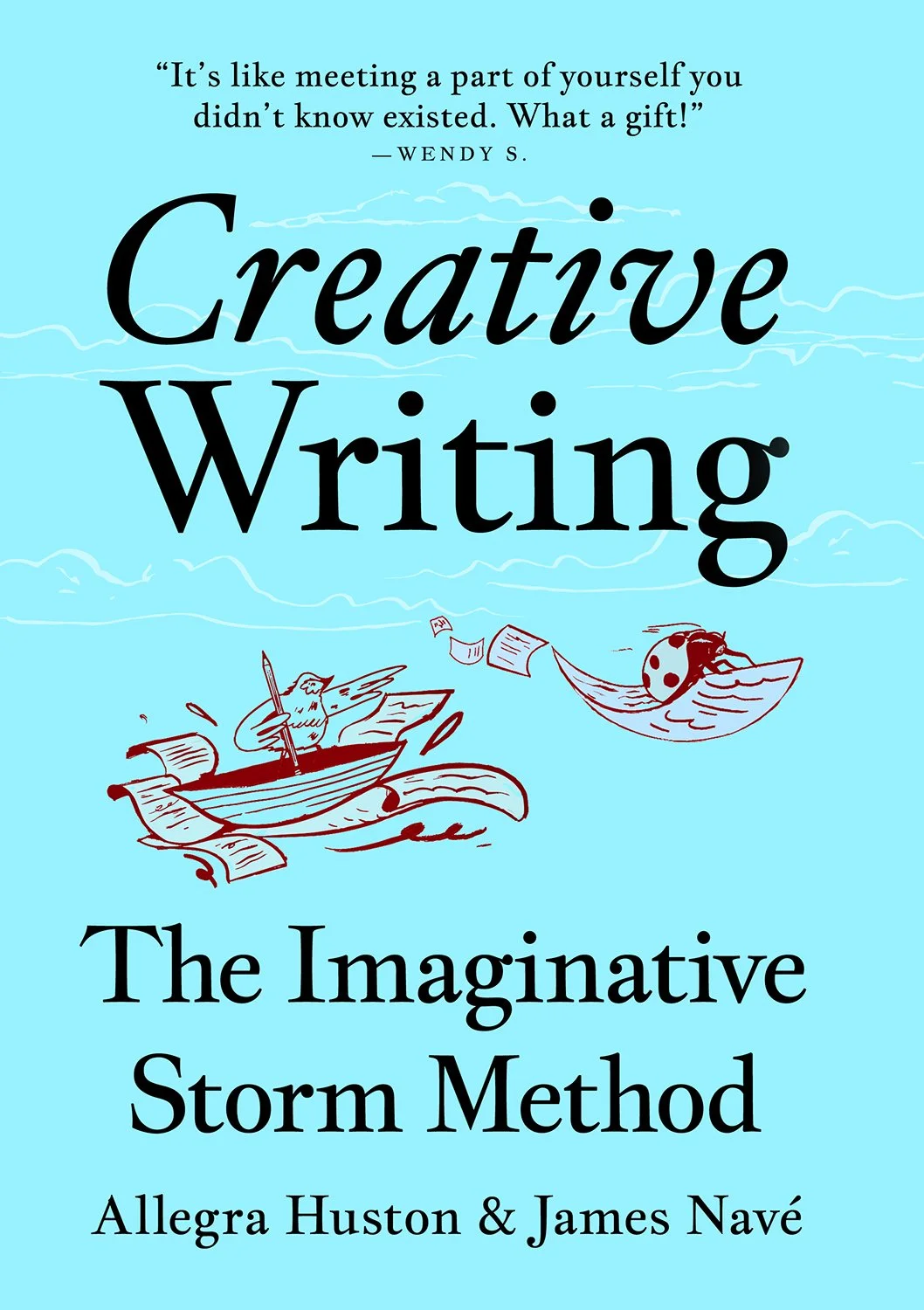
Imaginative Storm Creative Nonfiction Course:
Write True Stories that Read Like Great Fiction
A Creative Nonfiction Course for Writers Who Want the Truth to Land Like a Story

What Are Creative Nonfiction and Narrative Nonfiction
Creative nonfiction is true writing that borrows the tools of fiction, scene, character, voice, structure, and tension, to tell stories that actually happened. Narrative nonfiction, the personal essay, literary journalism, and memoir all live under this wide and generous roof. What unites them is a single commitment: the events are real, and the telling is artful.
The distinction worth knowing is small but useful. Narrative nonfiction leans on story, an arc with movement and stakes. The personal essay leans on thought, the mind working something out on the page in real time. Most strong writing in the form does both at once. If you are writing about the real world and want it to resonate the way great storytelling does, this is where you learn how.
What makes the form demanding is also what makes it thrilling. You cannot invent your way out of a flat passage. You have to find the story that was already there and tell it so well that no reader doubts it happened. That constraint is not a limit. It is the engine of the form's particular power.

What You Will Learn in This Creative Nonfiction Course
The best narrative nonfiction reads like fiction: propulsive and vivid and emotionally true, while every word stays grounded in fact. Through the Imaginative Storm method, you will learn to shape real events into scenes a reader can step inside, find the narrative arc hiding in lived experience, and build the kind of momentum that carries someone from the first sentence to the last.
You will work on the craft that makes true stories land. How to render a moment instead of summarizing it. How to use your own voice as an instrument rather than a default setting. How to decide what to leave out so that what remains hits harder. You will learn to trust detail over explanation, and to find the shape in material that arrived in your life without one. By the end, you will have new pages and a clearer sense of how nonfiction earns its power.
This is also where short writing becomes long work. The timed prompts produce raw material quickly, and over the course you will learn to connect those pieces, to see how a single vignette becomes a chapter and a handful of chapters begin to hold a shape. If you have a memoir, a family history, or a book that has stalled, this course is built to move it forward, one honest scene at a time.

Creative Nonfiction Writing Course Curriculum
The course contains 10 writing sessions, each about 90 minutes long. The welcome session introduces you to the Imaginative Storm method, and the concluding session to set you on your writing path.
Each writing session consists of a short intro, a warmup prompt, two 10-minute prompts with a shorter list-making prompt between them. (We do the timing for you.) Each session ends with a Surf the Storm prompt to do in your own time.
The course also includes access to the Prompt Archive, so you can hear what other course participants wrote to the prompts you’re working with. (We recommend you listen to these after you write to the prompt yourself.)
-
Learn the principles of the Imaginative Storm method which includes: writing by hand, using a timer, writing what you don’t know.
What you’ll learn:
The benefits of not trying to write well, and why unleashing your imagination is the secret to powerful, original writing.
-
Unlock the creative power that’s been waiting inside you
In this first session, you’ll discover the freedom of writing without second-guessing yourself. You’ll learn simple techniques to tap into your inherent creativity and write like you’ve never written before. This session opens the door to creative breakthroughs that will amaze you.
What you’ll learn:
● How to tap into your imagination and write with spontaneity, originality, and creative flow
● How to find your true writing voice and express your experiences, insights, and emotions with authenticity
● How to revive stories you’ve told before by uncovering fresh angles, deeper truths, and untold layers
● How to write more powerfully and freely by letting go of perfection and embracing curiosity
-
Unleash your raw, uncensored voice
In this high-energy session, you’ll write without rules or judgment. By letting go of your inner editor, you’ll begin to build momentum that breathes life into characters, brings fluidity to dialogue, and connects with readers. Your creative writing begins to feel alive.
What you’ll learn:
● How to transform your writing and produce material you didn’t know was inside you
● How to tell vivid, visceral stories that evoke emotion in the reader.
● How to make a character feel unique and grounded in their own reality by writing truthful dialogue.
● How to silence your inner critic, let the truth come forth, and develop your authentic writing voice.
-
Write with sensory power
Great writing doesn’t just describe—it immerses. This session will help you connect with all your senses, including physical feelings, intuition, memories, and the atmosphere of a place, to make moments feel more vivid.
What you’ll learn:
● How to make your readers feel what you feel
● How to make scenes come alive using sensory language
● How to uncover rich details that create an emotional connection
● How to re-enter experiences through the body and the imagination
-
Use details of place to deepen emotional connection
In great writing, setting is more than just a backdrop. It holds memory, mood, and meaning. In this session, you’ll learn how to use location as a tool for emotional depth, character development, and narrative movement.
What you’ll learn:
● How to avoid descriptions that read like laundry lists
● How to use sensory and spatial information to build atmosphere, suspense, or reminiscence.
● How to use a place’s textures and echoes to bridge the past, present, and future.
● How to re-inhabit past moments with honesty and depth
-
Incorporate nature’s power and symbolism
Nature is more than scenery—it’s the original storyteller. In this session, we will explore ways to integrate the natural world into your writing. Life’s elements, from seasonal changes and weather patterns to plants and trees, will become a lens through which you understand your own and your characters’ journeys.
What you’ll learn:
● How to use nature and elements to build impactful metaphors
● How to connect personal experience to universal cycles for deeper resonance
● How to transition from granular focus to an expansive perspective to craft a scene or memory
● How to place your story in the context of living history and the rhythms of time
-
See beneath the surface of human interaction
Great stories are constructed not only from words but also from subtext, tension, and unspoken elements. This session explores “Socialese,” the secret language of relationships, group dynamics, and social identity. This will teach you to recognize the subtle indicators of human behavior and to effectively translate them into your written work. This is where character, motivation, and emotional complexity take shape.
What you’ll learn:
● How to create life-like, layered, and deeply human characters
● How to use silent behavioral cues and nuances to convey identity, status, and affiliation
● How to infuse everyday moments with meaning by capturing social subtext
● How to allude to your characters’ lives outside the main narrative to make your world feel richly inhabited
-
Create characters with depth and complexity
The essence of a gripping story lies in its characters, who are propelled by things they themselves don’t understand. This session explores how to look beyond surface-level traits and expose the emotional reality behind your characters’ actions and decisions, even when they themselves don’t grasp their own inner workings. This is where your characters come to life, animated by their experiences, inconsistencies, and underlying drives.
What you’ll learn:
● How to create multifaceted characters, be they heroes, villains, or neutral figures.
● How to use voice, gesture, and emotional tone to capture the feeling of being in someone’s presence
● How to make minor characters memorable, even with limited page time
● How to create characters different from yourself with empathy, credibility, and subtlety
-
Use personal experience to deepen whatever you’re writing
Even though you are writing creative nonfiction, your own experience is your richest source material. In this session, you will uncover the deeper meanings behind your life experiences. Discover memories, perspectives, and emotional truths that can add authenticity and depth to your work.
What you’ll learn:
● How to identify the emotional arc of your story
● How to choose the life experiences that support your narrative’s aim
● How to make your reader feel connected to the experiences
-
Build structure and momentum into your story
Every story needs change. It’s how your narrative gains its shape, purpose, and emotional force. In this session, we’ll cover how to identify your story’s central theme, decide what to include or exclude, and maintain reader interest throughout the narrative. This is where your powerful material begins to take form.
What you’ll learn:
● The building blocks of strong storytelling for creative nonfiction
● How to recognize what comes next, even if you’re not sure where you’re going
● How to build excitement in your narrative by intensifying tension, stakes, or emotion
● How to make your story feel whole and satisfying with a strong beginning and ending
-
Use contradiction and paradox to add dimension to your writing
Use contradiction and paradox to add dimension to your writing
Paradox is what thrills the imagination — and where readers lean in. The most compelling narratives thrive on conflict, balancing opposing forces like light and dark, certainty and doubt, or love and fear. In this session, you will learn to leverage opposites to create complex characters and scenes, and understand how duality makes storytelling more layered, truthful, and alive.
What you’ll learn:
● How to spark imaginative energy by embracing paradox and opposing forces
● How to reveal deeper truths accepting ambiguity and complexity
● How to reimagine conflict in fresh, compelling ways
● How to craft narratives that capture life’s nuances and avoid simplistic, predictable plots
-
Our goodbye session. We will send you off into your writing future with one final prompt, and the hope that you will become part of our welcoming, supportive community.
Listen Now
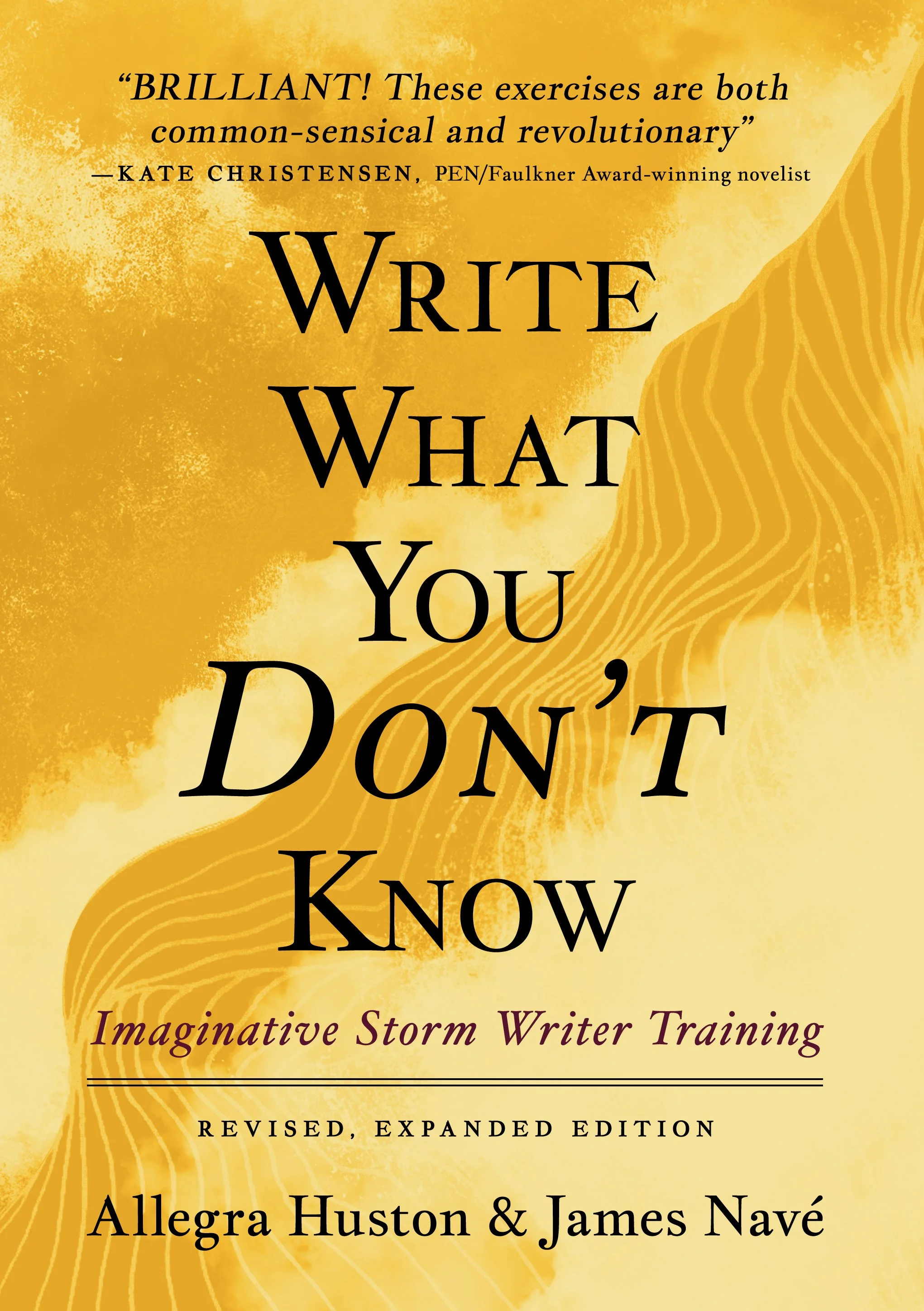
Listen to extracts from the book and audio course Write What You Don’t Know
How to a playful approach leads to breakthbroughs.
How to find your authentic voice on the page
How to vanquish your inner critic.
Your most powerful material comes when you surprise yourself.
The secret to writing well is not trying to write well
Be vulnerable, explore the uncomfortable, and develop your confidence.

Who This Creative Nonfiction Course Is For
This nonfiction writing course is for writers drawn to what is real. The journalist who wants to go past the facts and into the story underneath them. The essayist looking to sharpen a form they already love. Anyone holding an authentic experience that deserves the craft and intention a good story demands.
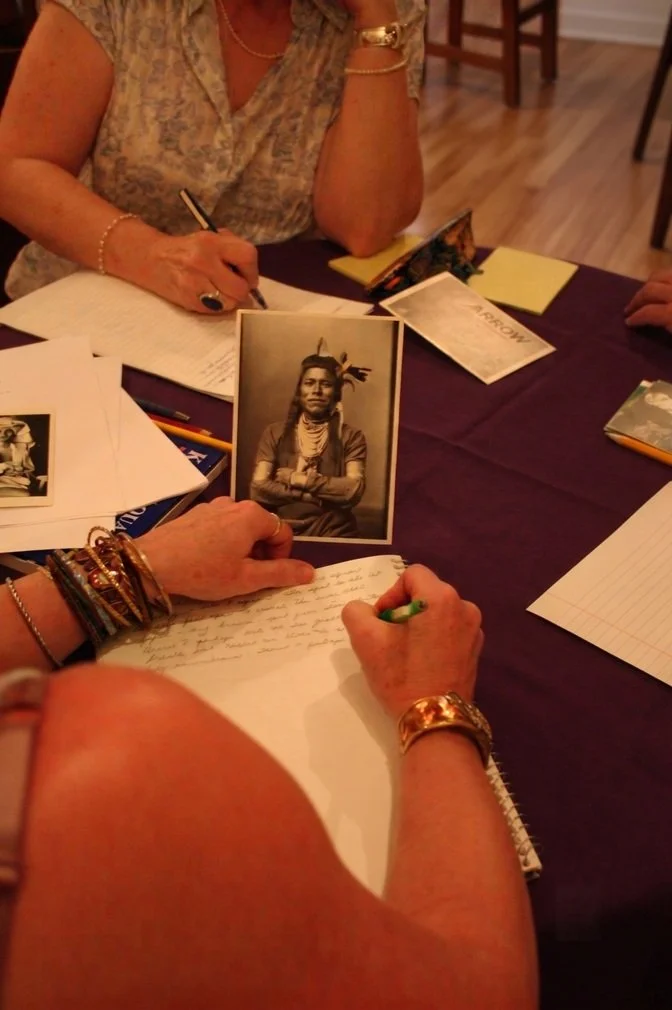
It is also for the fiction writer who wants more grounded specificity in their work, and for the beginner who would rather start with what they know before venturing into invention. You don't need clips, a byline, or a finished draft. You need a true thing you want to tell well, and the willingness to find out what it asks of you. This is a working course built around the Imaginative Storm method, where you write as you learn.
It is for you, too, if writing keeps slipping down the list. If your time is short, if the steady practice you once had has gone quiet, if some mix of perfectionism, self-doubt, and plain avoidance keeps coming between you and the page. The Imaginative Storm method is built for exactly this. The timed prompt is small enough to begin, quick enough to outrun second-guessing, and low-stakes enough that perfectionism never gets its footing. You move through the resistance by writing, not by waiting to feel ready.
The course itself is self-paced, so you can write on your own schedule, wherever you are. And if you know you do your best work with other people around you, you can build accountability on top of it: weekly virtual sessions and in-person workshops that turn a solo practice into a shared, sustainable habit.

Ready to Get Started?
There are two Ways to Take Our Intro to Writing Course
You can take our 10-session self-paced course in audio or video formats. Both go in-depth into the Imaginative Storm method. It will teach you how to access your imagination and memories and get words down on paper. Then it will go into the craft of effective, memorable poetry writing.

Purchase with confidence. Try the course and if you’re not completely satisfied, we’ll give you a full refund within 30 days of your purchase.
Not sure if this course is for you?
You can purchase just the Welcome Session and Session One video for $39. If you like it, you can then purchase the rest of the sessions for $360.
Meet Your Creative Nonfiction Instructors
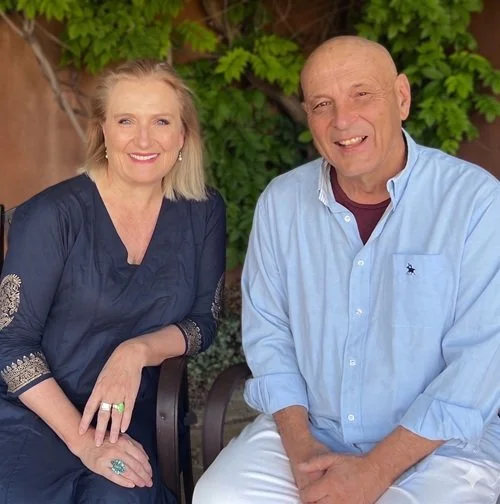
Allegra Huston has spent her career inside nonfiction, in every room of it. She is the author of Love Child: A Memoir of Family Lost and Found, and she has written across the form for years, from literary memoir to journalism for publications including The Times, Harper’s Bazaar, and People. That range matters. She knows how a personal essay finds its turn, how a reported piece holds its line, and how a true story decides what kind of story it wants to be. She teaches from inside the work, not from above it.
James Navé brings the storyteller’s eye to true material. Across decades as a poet, manuscript coach, and facilitator, he has helped writers uncover the arc buried in their own experience and the momentum that keeps a reader leaning in. His instinct is for shape and pace: where a piece should open, where it should turn, where a single honest line does the work of a whole paragraph. In a form built on fact, he keeps the writing alive.
Between them, they hold the two things this form depends on: fidelity to what is true and the craft to make it unforgettable.
What Past Creative Nonfiction Students Say
-
![]()
"Once I started, I was hooked. It challenges me to stay creative and teaches me a new way to do that. I love how this course keeps my writing alive, fresh, and new."
— Deborah Williams, content writer and educator
-
![]()
“The Imaginative Storm method is so productive; it efficiently gets you right down to the heart of the matter. And the best part of all is that it’s fun and full of surprises!”
— Terry Varner, writer
-
![]()
"Quite a remarkable set of discussions. Your book is like a bible to me now, but this adds so much more context and depth. What a wonderful way to get the juices flowing!"
— Dan Stenabaugh, writer
Video Testimonials from Our Participants

Books About Writing by Allegra Huston & James Navé