
The rational mind: executor or executioner?
Your choice!
NOV 04, 2024
For the past three years, we've been describing Imaginative Storm writing as a dance between the rational mind and the imagination, with the imagination the partner leading the dance. More like a tango than a foxtrot: if you're following, you don't know where your partner is going to take you next. If you've ever taken tango lessons, which I have, you know that following is astoundingly difficult. Especially if you're someone, which I am, who likes to be in control.
So the imagination gets to lead, and the rational mind's job is just to stay with it: not to collapse in a heap or storm off in a huff. This is not easy, to begin with, for us controlling folks, but what a result! Not only do you write far more interestingly, you have a lot of fun doing it. Because, you—that's the Buddhist "you that's watching you" or the Freudian superego—get to identify with whichever partner you want. With a bit of practice, you stop inhabiting your rational mind for those 10 minutes of writing and inhabit your imaginative mind instead.
Our image is starting to change. Why? Because we no longer think of the rational mind and the imagination as the two halves of your mind. As we develop the concept of imaginative intelligence, we're understanding that it encompasses the entire body, since that is your storehouse of information. The imaginative intelligence draws on everything: zillions of bits of data accumulated throughout your life and perhaps before, too: your evanescent memories, your forgotten history, your emotions, your bodily sensations both conscious and unconscious, everything you've ever thought or seen or heard or felt. It encompasses your physical intelligence, your somatic intelligence, your emotional intelligence. It creates patterns and images and insights out of this vast range of material at lightning speed.
Compared to the vast cosmos of everything you've ever experienced, which is at the imaginative intelligence's fingertips, the rational intelligence has a pitifully small amount of data to draw on: just the thoughts, judgments, prejudices, anxieties, hopes and fears that are present in your conscious mind. And its processor is pitifully slow in comparison. That's why a "gut feeling" seems to bypass your consciousness: your imaginative intelligence has reached a conclusion before your rational intelligence has had a chance to plow its way through the possibilities.
As I wrote a few weeks ago, in this scenario, your rational intelligence is not that good at driving the bus. You may have been told, as I was, that when you’re faced with an important choice, you should list the pros and cons. I could never understand why the lists ended up roughly the same length. My explanation now is that you’re depending on your rational intelligence, rather than calling in its partner. That roughly-the-same-length list is the sign that your rational intelligence is hedging its bets until your imaginative intelligence, your gut feeling, weighs in. And it has prepared a nice list of good reasons for whichever choice you’re inclined to land on.
You’ve probably also noticed, as Antonio Damasio puts it in Descartes’ Error (which I’m rereading at the moment), that “Few things can be as salutary, once you find an intellectual hurdle, as taking a vacation from the problem.” What’s happening here? Your rational intelligence has got stuck and won’t let go until you redirect it elsewhere—and that allows space for your imaginative intelligence to rearrange the information in a new, creative way.
The rational mind trades in argument. The imaginative intelligence is bored by argument; it amuses itself by tossing in the unexpected and rearranging the pattern. And the imaginative intelligence doesn’t judge what it comes up with; it’s a flibbertigibbet, always onto the next thing. The rational intelligence is the dreamcatcher: filtering and selecting, assessing and prioritizing.
So this is the organizational partnership—in life (not just in the dance of Imaginative Storm writing): a playful, exploratory, intuitive consciousness, plus a personality-driven, deliberating, planning, time-aware consciousness that likes achievement. The imaginative intelligence absorbs and responds to the world; the rational intelligence wants to understand and make a mark on the world. It appreciates being in control—but it tends to overstep.
Thanks to the Age of Enlightenment, also known as the Age of Reason, we live in a culture that values the rational intelligence at the expense of the imaginative intelligence. Sure, we value artists, but we think they're somehow a different breed. In a way they are, but largely because they haven't bought into the story that reason is king.
Most of us, as we grew up, put away childish things. Frankly, St. Paul, not great advice. We were told to stop being silly. We forgot how to play, except when confined by rules. We learned to discount gut feelings and intuitions as "woo-woo.” We were chastised for letting our feelings interfere with our judgment: “Be reasonable!” they said. Result: the rational mind morphs from being the executor to being the executioner—actually, the would-be executioner—of the imaginative intelligence.
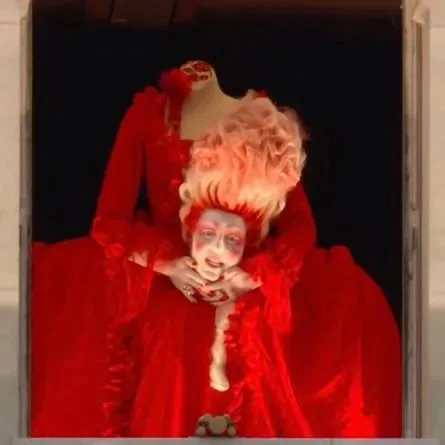
Except, the imaginative intelligence cannot be done away with. Why? Because it’s the substance of being alive. Reason, it's been said, is what separates humans from "the animals"; imaginative intelligence is what unites all living things.
So no matter how much someone seems to be "all brain," super-rational, divorced from body and emotion, "not a creative bone in my body," their imaginative intelligence is there, as potentially powerful as anyone else's, waiting to be explored. In over 20 years of teaching writing workshops, I’ve seen that everyone—yes, everyone—is capable of writing with originality, verve, and emotional impact. And that’s just writing. There are infinite ways of expressing your imaginative intelligence. Not just in the arts, but in science, technology, sports, business. By definition, anything new is born of imaginative intelligence.
In Descartes’ Error, Damasio also quotes the physicist and biologist Leo Szilard:
“The creative scientist has much in common with the artist and the poet. … Those insights in science that have led to a breakthrough were not logically derived from preexisting knowledge. The creative processes on which the progress of science is based operate on the level of the subconscious.”
My creative collaborator James Navé suggested that imaginative intelligence is like a garden. We each have our own. We can neglect it, allow it to get overgrown so that the paths are brambly and we can't find a way in. Or we can nourish it, water it, cultivate it, trace paths into its furthest recesses and bring back treasures for the rational intelligence to appreciate and shape further, in order to make its mark on the world.
AVISO! I’m not a neuropsychologist or trained in any scientific discipline. I’m just enjoying this exploration of the idea of rational and imaginative intelligences with my own team of rational and imaginative intelligences.